

-
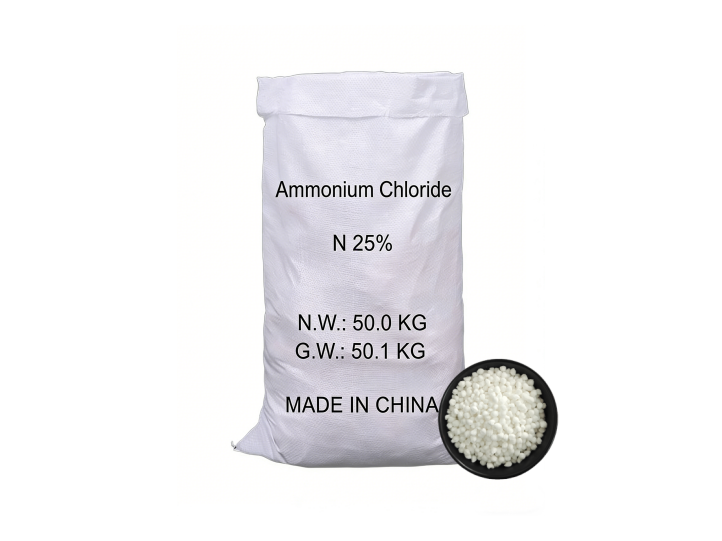
Agricultural Grade Ammonium Chloride powder
Ammonium Chloride, chemical formula NH₄Cl, is an inorganic crystalline compound also called sal ammoniac. It is a white, odourless solid consisting of ammonium cations and chloride anions. Ammonium Chloride dissolves readily in water, and the dissolution process absorbs heat, creating a noticeable cooling effect. This distinctive physical property is one of its well-known characteristics. Under heating, Ammonium Chloride undergoes sublimation: it decomposes into ammonia gas and hydrogen chloride gas, and the two gases can recombine to form solid Ammonium Chloride again upon cooling.
Agriculture represents one of the major markets for Ammonium Chloride. It functions as a nitrogen fertiliser containing roughly 25% nitrogen. The nitrogen exists in ammonium form, which can be retained in soil and gradually taken up by plant roots. It also supplies chloride ions that benefit specific crops such as rice, wheat and cotton. However, Ammonium Chloride is not suitable for chlorine-sensitive plants including tobacco, potato and some fruit trees, because excess chloride may hinder starch accumulation and reduce product quality. It performs better on neutral and alkaline soils, while continuous heavy application on acidic land needs careful management.
Industrially, Ammonium Chloride has diverse uses. It is widely used as a flux for metal soldering to remove oxide layers on metal surfaces and ensure strong welding joints. In battery manufacturing, it acts as an electrolyte component for dry-cell batteries. It can also serve as a raw material for making other ammonium chemicals, a dyeing auxiliary in textile processing, and a corrosion inhibitor. In the pharmaceutical sector, Ammonium Chloride may be used as an expectorant in certain medicines under strict dosage control.
Safety and handling precautions are necessary for Ammonium Chloride. When mixed with strong alkaline materials, it releases irritating ammonia gas, leading to nitrogen loss and potential respiratory irritation. Prolonged inhalation or skin contact should be avoided. Ammonium Chloride should be stored in dry, ventilated places and kept away from alkalis.
As a multi-functional inorganic salt, Ammonium Chloride bridges agriculture and modern manufacturing. Its low production cost and reliable chemical properties make Ammonium Chloride an important raw material in many industries worldwide.