

-
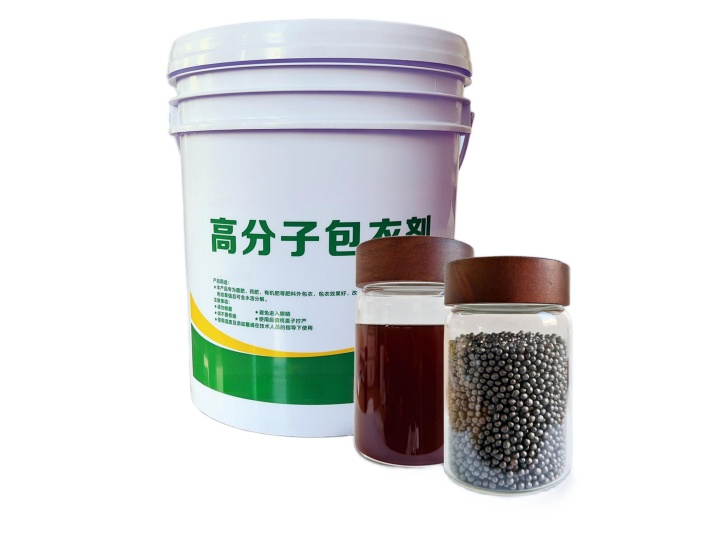
Fertilizer Polymer Film-Forming Agent
Anti-caking agent is a functional additive incorporated into powdered and granular commodities to prevent particle agglomeration and maintain consistent free-flow performance throughout manufacturing, storage, transportation and end usage. Powders and granules tend to cake when exposed to humidity, compression and temperature variation. Moisture forms liquid bridges between particles, which gradually harden into solid lumps and block feeding, dosing and packaging processes. The anti-caking agent addresses this challenge via two core mechanisms: it either absorbs excess moisture from the product matrix, or coats each raw particle to form a physical barrier and reduce inter-particle adhesion force.
Common commercial anti-caking agents include silicon dioxide, calcium silicate, magnesium stearate, tricalcium phosphate and sodium aluminosilicate. Featuring fine particle size, large specific surface area and stable chemical inertness, these materials are widely used in many industries. In the food industry, anti-caking agent is added to table salt, powdered sugar, seasoning blends, milk powder and bakery premixes to ensure easy pouring and uniform mixing. In agriculture, anti-caking agent is critical for granular fertilizers and feed additives. It prevents caking during bulk transportation and enables even spreading in fields. It is also applied in detergents, fine chemicals and plastic powder formulations.
Selection of a suitable anti-caking agent depends on the product’s hygroscopicity, particle properties, storage conditions and regulatory compliance. The dosage must be strictly controlled. Excessive addition may affect product purity, colour or solubility, while insufficient dosage fails to deliver reliable anti-caking performance. All qualified anti-caking agents must meet regional safety standards before commercial application. With rising global demand for automated powder processing, high-performance anti-caking agent remains an indispensable auxiliary material that improves handling efficiency, cuts waste and stabilises the quality of finished products.